














EUDR: what changes on 30 December 2026.
The EU Deforestation Regulation, Regulation (EU) 2023/1115, is the most significant change to commodity trade rules in a generation. After two postponements, its main obligations apply to large and medium operators from 30 December 2026, and to micro and small operators from 30 June 2027.
What the regulation requires
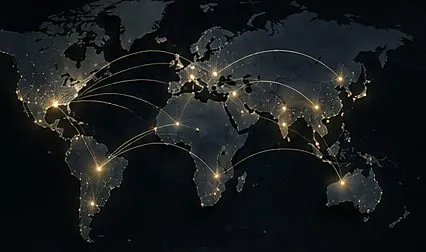
Operators placing covered commodities on the EU market, or exporting them from it, must show three things: that the products are deforestation-free, that they were produced in line with the laws of the country of production, and that they are covered by a due diligence statement.
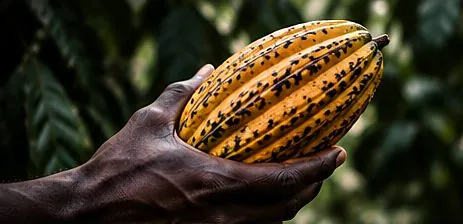
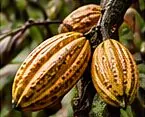
- Covered commodities: cattle, cocoa, coffee, palm oil, rubber, soy and wood, plus products made from them.
- Cut-off date: produce from land deforested after 31 December 2020 is non-compliant.
- Geolocation: each shipment must be linked to the plots of land where the commodity was produced.
How the timeline moved
The regulation entered into force on 29 June 2023 and was first meant to apply from 30 December 2024. It was delayed by one year in December 2024, and again in December 2025 through Regulation (EU) 2025/2650, which set the current dates and introduced simplifications. In May 2026 the European Commission presented a further package of implementing measures and confirmed it will not reopen the text, so companies should plan for 30 December 2026.
What was simplified
- Only the operator that first places a product on the EU market has to submit a full due diligence statement.
- Micro and small primary operators submit a one-off simplified declaration.
- Most downstream operators and traders no longer submit their own statements.
The core requirement did not change: plot-level proof of origin and deforestation-free status. The simplifications reduce paperwork for some businesses, not the need for evidence.
What it means for cocoa exporters in West Africa
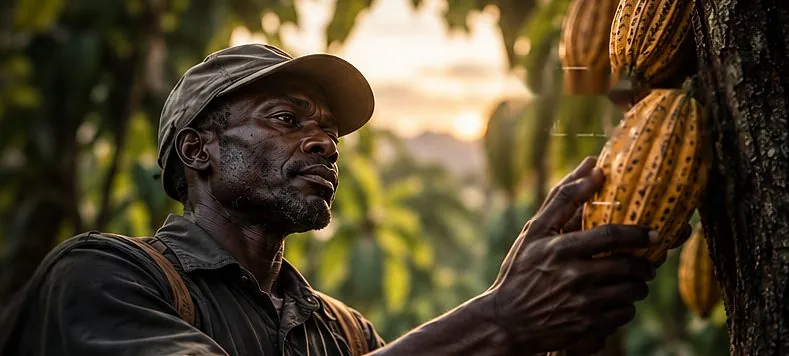
Most cocoa is grown by smallholders on small plots that have never been formally mapped. Exporters now need to link every EU-bound shipment to those plots and show that none were cleared after 2020. In practice that means four things:
- Map and register supplying plots, with boundaries that match satellite imagery.
- Keep compliant produce physically separated from produce of unknown origin, because mixing can put a whole shipment at risk.
- Hold evidence that can be checked by a buyer or regulator, not just supplier declarations.
- Keep that evidence current as imagery and supplier lists change.
Where QAELUM fits
QAELUM Oracle Intelligence checks field records against satellite imagery and public data, then seals each verified plot record with a time stamp and cryptographic proof. The result is evidence that exporters can attach to due diligence, and that buyers and regulators can check for themselves. We are starting with cocoa in Ghana.
Sources
- Regulation (EU) 2023/1115, EUR-Lex
- Delay until December 2026 and other developments, EU Access2Markets
- European Commission releases new EUDR measures, May 2026
- EUDR information, Cocoa Association of Asia
This article is general information, not legal advice. Check obligations for your business with qualified counsel.